

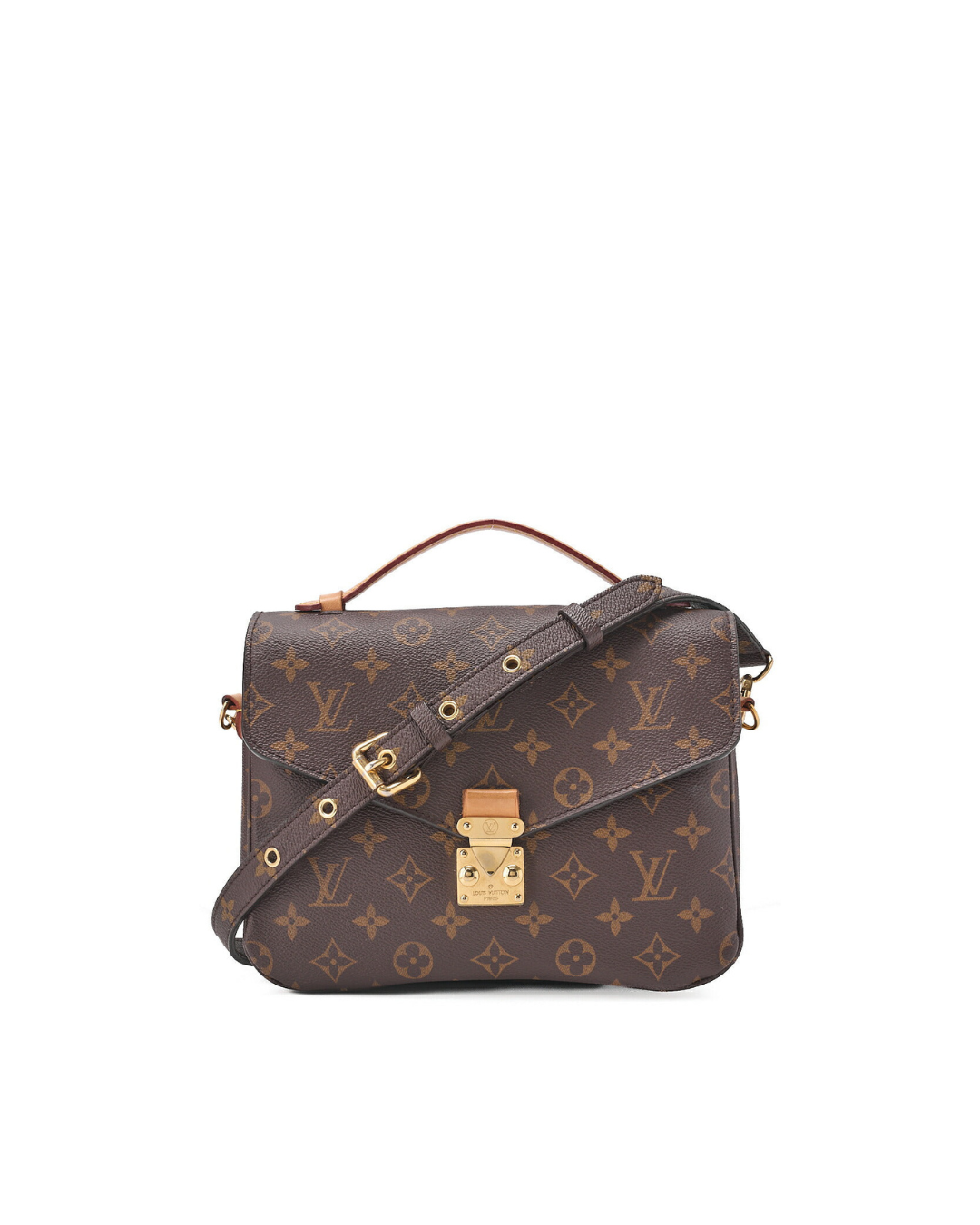
The Louis Vuitton Métis bag is today one of the most desired it-bags in the world. It’s no coincidence: behind this seemingly compact accessory lies a story of artisanal excellence, a design that has evolved over time without losing its essence, and a market value that — unlike many fashion bags — tends to hold steady or even increase over time.
In this complete guide, I tell you everything: the history of the Métis, the most sought-after versions (with a special focus on the Monogram Reverse and the Empreinte in pink leather), how much it’s worth on the second-hand luxury market, how to recognize an authentic piece, and why today it is considered one of the best investments in the world of luxury bags.
Read to the end: in the end, you will know exactly what to look for, what to avoid, and — if you’re ready — where to find an authentic and certified one.
1. The Origins: Where Does the Louis Vuitton Métis Come From?
To understand the Métis, you have to start at the beginning, at the dawn of the Maison itself.
Louis Vuitton was born in 1821 in a small village in the Franche-Comté region of France. At just 13 years old, he left home and walked hundreds of kilometers to Paris, where he began working as an apprentice for a trunk maker, Monsieur Maréchal. It was here that he learned the art of luxury luggage: selecting materials, perfecting stitching, and ensuring the durability of locking mechanisms.
In 1854, he founded his Maison on rue Neuve-des-Capucines in Paris. His most revolutionary innovation? Abandoning the traditional convex trunks — which could not be stacked — in favor of trunks with flat lids, much more practical for travel by train and ship. Thus, the legend was born.
In 1896, the son Georges Vuitton created the famous Monogram canvas: the intertwined LV initials with floral motifs on a brown background, also designed to counter the numerous imitations that were already rampant in the market at the time. A visionary choice: that pattern would become one of the most recognizable logos in the world for over 130 years.
The Pochette Métis was born much later, in an era when luxury stopped being just about first-class travel and began to mean moving through everyday life with style. Inspired by the classic messenger bag, the Métis was conceived as a bold accessory, compact yet extraordinarily spacious, capable of holding a smartphone, wallet, keys, glasses, and much more.
The name Métis recalls the Greek goddess of wisdom and cunning — a tribute to the contemporary woman: intelligent, dynamic, and aware of her own style.
2. The Iconic Design: What Makes the Métis Unique
The Pochette Métis is not just beautiful: it’s functionally brilliant.
Its most distinctive element is the "S" closure, directly inspired by the locking mechanisms of the historic Louis Vuitton trunks from the 19th century. This golden metal hook — elegant and sophisticated — is not just an aesthetic detail: it’s a signature, a historical continuity that links every Métis piece to over 170 years of artisanal heritage.
The bag’s profile is unmistakable: a semi-structured shape, a wider front flap that creates a quickly accessible external pocket, a body with ample internal space, and the dual option to carry it by the top handle by hand or with the removable and adjustable shoulder strap over the shoulder or crossbody.
This versatility is one of the secrets to its success: the Métis adapts. It works with a work suit, a casual weekend look, or an aperitif outfit. It’s not an evening bag, but it’s not a casual bag either: it’s something rarer — a bag that is always appropriate.
The Dimensions
The Pochette Métis measures approximately 25 x 19 x 7 cm, with a depth that surprises anyone using it for the first time. It can hold: a smartphone up to 6.7 inches, a long wallet, earbuds, lipstick, keys, and a pair of sunglasses. Compact in appearance, generous in practicality.
3. The Materials: Quality That Lasts Over Time
Louis Vuitton never compromises on materials. The Métis is available in several versions, each with its distinctive features.
Classic Monogram Canvas
The most iconic and recognizable version. The Monogram canvas is a treated canvas that combines cotton with resin to create a surface resistant to water, scratches, and daily wear. The parts in natural cowhide leather — the handle, shoulder strap, and trim — develop a unique golden patina over time, personalizing each bag in an unrepeatable way. This natural process, called patina, is one of the most beloved signs by collectors: a well-used and cared-for bag becomes more beautiful with the years.
Monogram Reverse Canvas
The Monogram Reverse was introduced in 2017 and immediately won over enthusiasts worldwide. The pattern is the same as the classic Monogram but with inverted colors: a light cream/beige background and dark brown LV initials. The result is a brighter, more modern aesthetic, perfect for those who want recognition without ostentation. The leather trims remain in natural cowhide.
Monogram Empreinte Leather
The more sophisticated version. Empreinte leather is cowhide embossed with a pressure print that imprints the Monogram pattern directly into the leather. The result is a rich, three-dimensional surface, incredibly soft to the touch. With use, this leather becomes even more beautiful: it softens, gains character, and develops a unique texture. The Maison itself states that "over time, Empreinte leather will become softer and more beautiful." Empreinte versions are available in a range of colors updated each season, including the highly sought-after antique pink, black, creamy ivory white, and sage green.
4. The Two Most In-Demand Models on the Market: Reverse and Empreinte Rosa
If you’re looking for a Métis and want to focus on what the second-hand luxury market considers most desirable — and most stable as an investment — there are two versions that dominate all others.
Louis Vuitton Métis Monogram Reverse: The It-Bag of the Decade
Launched in 2017 as part of the collection celebrating the Maison’s 160th anniversary, the Métis Monogram Reverse changed the game. Before its release, the Monogram Reverse appeared only on some accessories and pochettes. Applying it to the Métis created something special: a recognizable yet unexpected piece, iconic yet fresh.
The color contrast of the Reverse pattern — brighter, with beige dominating over brown — perfectly complements the structured shape of the Métis. The result is a bag that "stands out" without shouting, conveying brand knowledge and good taste rather than mere ostentation.
In the pre-owned market, the Métis Reverse is constantly sought after and rarely remains available for long. Those who sell it rarely look for another one: those who buy it often keep it for years. This is the sign of a truly special piece.
What to expect as an investment: a Métis Reverse in excellent condition purchased at a fair price retains its value over time and — if Louis Vuitton raises retail prices (the brand has significantly increased prices in recent years) — it can appreciate on the secondary market.
Louis Vuitton Métis Empreinte Rosa: The Ultimate Collector's Piece
If the Reverse is the versatile it-bag by definition, the Empreinte leather Métis in pink (available in shades ranging from pastel pink to antique pink) is something even more exclusive.
Empreinte versions are released in limited seasonal runs and often sell out in boutiques before the season ends. In the secondary market, finding a pink Métis Empreinte in excellent condition is no easy feat — and the price reflects this rarity.
Empreinte leather has characteristics that make it particularly appreciated by collectors: it is more scratch-resistant than canvas, less prone to wear at friction points, and develops a natural patina over time that makes it increasingly personal. The Monogram embossed in the leather does not separate, flake, or fade — it is literally part of the material.
Pink, in all its shades, has been one of the most sought-after colors in the women's luxury market in recent years. It is not a temporary trend: pink in luxury has proven to have longevity that many other colors do not. A pink Métis Empreinte purchased today will be sought after in five years just as it is today.
What to expect as an investment: among all the Métis variants, the Empreinte in rare colors (pink, green, blue) has the highest potential for appreciation in the secondary market. The combination of premium leather + seasonal color + iconic design creates a limited availability item in a market with growing demand.
5. The Métis as an Investment: The Numbers You Need to Know
Let's be clear: not all luxury bags are an investment. Many lose value within a few years. The Louis Vuitton Métis is an exception, and there are structural reasons behind this fact.
The Increase in Louis Vuitton Prices
Louis Vuitton — like Chanel, Hermès, and other major luxury brands — has implemented significant and systematic price increases in recent years. This has a direct effect on the pre-owned market: those who bought a Métis for €1,500 two years ago now have a piece that, new, would cost €1,900 or more. The residual value of their pre-owned item has naturally increased accordingly.
Demand Exceeds Supply
The Pochette Métis is one of the Louis Vuitton models subject to waiting list in official boutiques. At many times of the year — and for the most sought-after versions like the Reverse and the Empreinte — buying a new Métis requires weeks or months of waiting. This imbalance between demand and supply is the main driver of value retention in the secondary market.
Pre-Owned Market Prices
Based on current luxury second-hand market prices (2026), a Métis in good condition generally ranges between €1,500 and €2,800 depending on the model, material, and condition. Empreinte versions in rare colors can exceed this range. A Métis in excellent condition, with authenticity certification and original accessories (dust bag, box), increasingly approaches the price of a new one — an unmistakable sign of a market that does not depreciate.
6. How to Recognize an Authentic Louis Vuitton Métis: The Definitive Guide
This is the point that worries those approaching the pre-owned market the most — and rightly so. Métis imitations are widespread, increasingly sophisticated, and — to non-experts — can be difficult to spot. Here are the elements to focus on.
1. The Heat Stamp (Date Code)
Every authentic Louis Vuitton bag features a heat stamp — often mistakenly called a "serial number" — indicating the country of manufacture and the production date. On the Métis, this stamp is generally found inside, on a small leather tab or directly on the interior space. The format consists of two letters (country) and four digits (week and year of production). After 2021, Louis Vuitton has progressively replaced date codes with an RFID microchip integrated into the bag: a chip not visible from the outside but verifiable in official boutiques. The absence of date codes (or microchips in newer versions) is a warning sign.
2. The Monogram Canvas: Symmetry and Print Quality
On the authentic Métis, the Monogram pattern is centered and symmetrical on the front flap. The LV initials are never cut off at the edges except for minimal structural needs — and even then, the cut is always consistent and calculated. The print is sharp, the colors uniform, without smudges or tone variations. On imitations, even high-quality ones, the pattern tends to be slightly asymmetrical, and the prints less defined.
3. The Stitching
The stitches of an authentic Métis are made with mustard yellow waxed thread, uniform, with perfect tension at every point. The number of stitches per centimeter is consistent. Imitations often show irregular stitching, thread of a slightly different color (too yellow or too beige), or uneven tension.
4. The "S" Closure
The S-hook is one of the most imitated details — and also one of the easiest to spot on fake pieces. On the original, the metal is heavy, the mechanism clicks with a precise and satisfying "click," and the gold finish is uniform and deep. On counterfeits, the metal is light and hollow, the mechanism is imprecise, and the gold plating tends to fade quickly.
5. The Vacchetta and Leather
In versions with vacchetta trim, the authentic leather is soft, uniform, with a natural leather smell. Over time, Louis Vuitton vacchetta turns to a characteristic honey color: this process — the patina — is one of the most reassuring signs of a pre-owned authentic piece. Counterfeits use synthetic leathers or low-quality leather that do not develop patina but instead deteriorate, crack, or change color unnaturally.
6. The Weight
An authentic Métis has a precise and balanced weight, noticeable even when held empty. Quality materials have their own specific weight. Counterfeits are often lighter than they should be, or — in an attempt to compensate — heavier and unbalanced.
7. The Set: Dust Bag, Box, Invoice
An authentic Métis comes with a beige flannel dust bag with a drawstring, possibly the Louis Vuitton orange box, and — ideally — the original purchase invoice. The absence of these items is not in itself a sign of a fake (many pre-owned bags circulate without them), but their presence adds an extra guarantee and increases the value of the piece.
8. Trust Only Certified Sellers
Visual inspection, no matter how thorough, is never foolproof. High-end counterfeits (the so-called "super fakes") are made with such care that even expert eyes can be fooled from a distance. The only way to be absolutely certain is to buy from specialized and certified retailers, who conduct thorough physical checks on each piece before putting it up for sale.
7. Care and Maintenance: How to Preserve the Value of Your Métis
A well-maintained Louis Vuitton bag retains its value over time — and this is doubly true for the Métis, which is often found for sale on the secondary market even after years of use.
Monogram and Reverse Canvas: avoid prolonged exposure to direct sunlight, which can fade the colors. Remove any surface stains with a soft, slightly damp cloth. Avoid harsh chemical products. Store the bag in the dust bag when not in use.
Empreinte leather: it is more durable than canvas but still benefits from a nourishing cream specifically for fine leathers applied about every six months. Avoid prolonged contact with colored surfaces (dark jeans, for example) that could transfer pigment onto the light leather.
Vacchetta leather: the patina is natural and desirable — do not try to remove it. Avoid direct water contact: if the bag gets wet, dry it immediately with a soft cloth and let it air dry away from heat sources.
Hardware: the gold plating on the S closure and other metal elements can show signs of wear over time. This is normal and does not compromise the authenticity of the item, but it affects resale value. To preserve the hardware, avoid contact with perfumes, creams, and abrasive objects.
8. Where to Buy an Authentic Pre-Owned Louis Vuitton Métis
The luxury pre-owned market has grown enormously in recent years, but not all channels offer the same guarantees. Buying a pre-owned Métis can be a great deal — both economically and sustainably — but only if you choose the right partner.
Here’s what distinguishes a reliable reseller:
- Physical authentication: each bag is examined by experts who verify materials, stitching, hardware, and date code before sale.
- Transparency on condition: the condition of the item is described honestly and in detail, with real high-resolution photos showing any imperfections.
- After-sales guarantee: the possibility of returns or support in case of doubts is a sign of reliability.
- Documented package: clear information on what is included with the bag (dust bag, box, original invoice).
At Aurea Luxury Lab, every Louis Vuitton Métis we put up for sale has been physically authenticated by our team of experts. We never sell a piece unless we are 100% certain of its authenticity. Our reputation depends on the trust of those who choose us — and this is a commitment we take seriously every day.
9. Frequently Asked Questions about the Louis Vuitton Métis
Is the Métis a good investment?
Yes, among mid-range Louis Vuitton bags, it is one of the most solid investments. Its value on the secondary market holds up well — especially for the Reverse and Empreinte versions in popular colors — thanks to the balance between high demand and limited availability.
What is the difference between Pochette Métis and Métis?
The most precise term used by Louis Vuitton is "Pochette Métis." On the market and in common language, the bag is simply called "Métis." It refers to the same model.
How can I verify authenticity remotely?
At a distance, no verification is definitive. High-resolution photos allow you to check stitching, patterns, and hardware, but absolute certainty requires a physical examination. Buying from a certified dealer is the only way to eliminate risk.
Is the Métis Reverse worth more than the classic Monogram?
On the pre-owned market, the Reverse tends to have prices similar to or slightly higher than the classic Monogram, all else being equal. The perceived rarity and modernity of the design make it particularly desirable.
Can I use the Métis every day?
Yes. It is designed exactly for this. The Monogram canvas is resistant to daily use; the Empreinte leather even more so. With proper care, a Métis used every day remains in excellent condition for many years.
What is the right size: regular Métis or Métis East West?
The classic Pochette Métis is the most widespread and sought-after version. The East West variant — wider and lower — is less common on the secondary market. For those looking for the "canonical" Métis, the standard version is the simplest choice and the one with the greatest liquidity on the pre-owned market.
Conclusion: The Métis Is Not Just a Bag
The Louis Vuitton Métis is the result of 170 years of heritage, a design that combines past and present, and craftsmanship that makes no compromises. It is a bag that tells a story — that of a Maison born from the vision of a young French artisan and that has become the global symbol of authentic luxury.
If you are looking for an accessory that is beautiful to carry every day, recognizable without being vulgar, and capable of maintaining its value over time: the Métis is exactly what you are looking for.
In particular, if you can choose among the different versions available on the pre-owned market, the Monogram Reverse and the Empreinte in pink leather are today the two models with the best balance between desirability, rarity, and potential value retention.
Do you want to find your authentic and certified Louis Vuitton Métis? Browse our selection on Aurea Luxury Lab: each piece has been physically verified, photographed in every detail, and described with complete transparency. Because true luxury doesn’t need to deceive anyone.


Leave a comment
This site is protected by hCaptcha and the hCaptcha Privacy Policy and Terms of Service apply.