

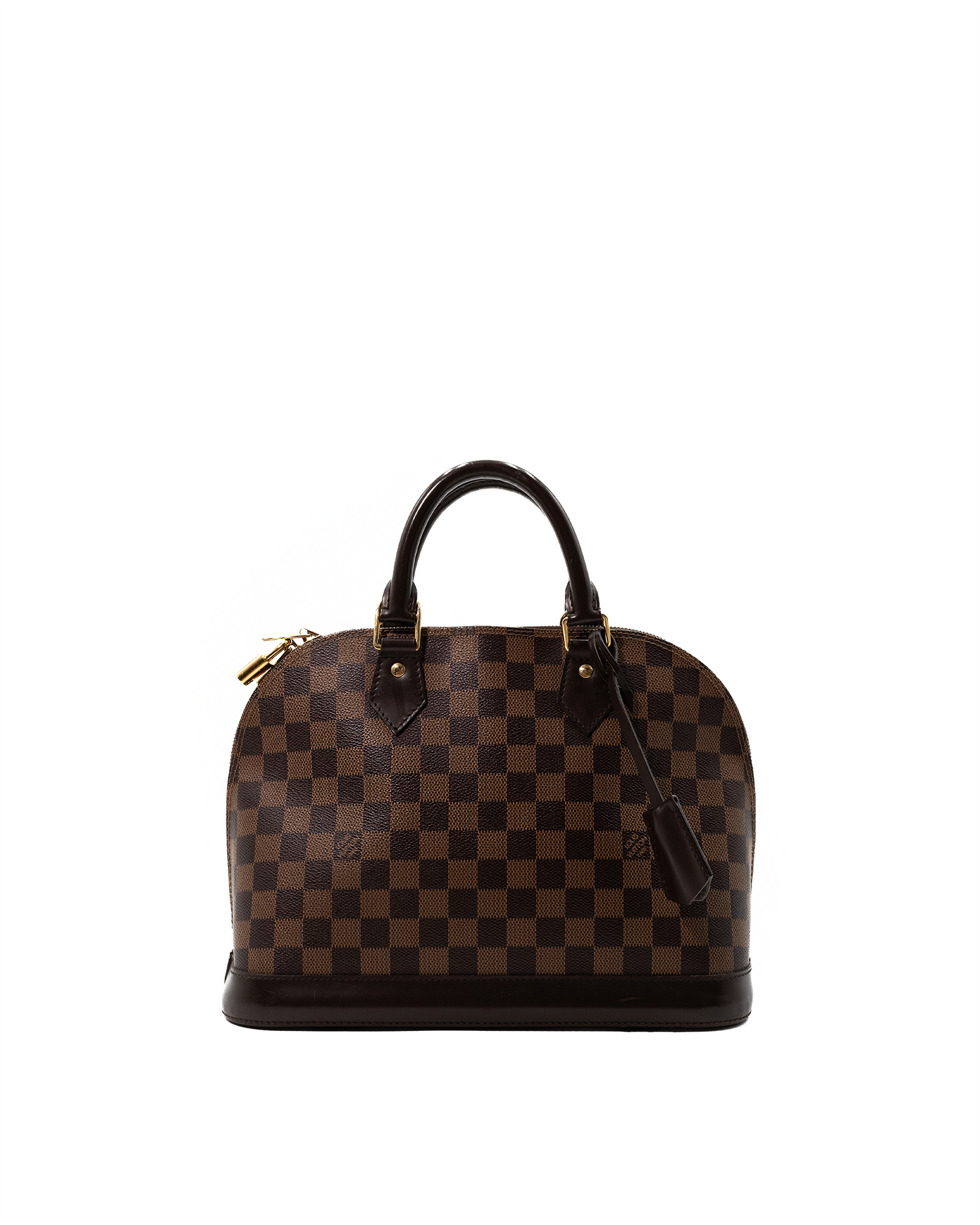
The Louis Vuitton Alma is recognizable by its shape before its monogram: a rigid rectangular base, sides that taper upward, a rounded upper profile, and a double zipper that runs down both sides to the base. It is a shape that allows little variation, which makes it one of the easiest bags to assess pre-owned, provided you know which four points to check.
Where that rigid base comes from
The name comes from the Pont de l'Alma, the Parisian bridge over the Seine. The structure, however, derives from a 1930s model from the maison, originally created for travel and later resized for everyday use. The reinforced base was designed to keep the luggage standing upright, which is also why the Alma still stands straight on a table even when completely empty.
It is a practical rather than aesthetic detail, and it has a direct consequence for the pre-owned market: the base and four corners are the areas that endure the most strain, so they are the first to show the bag's age.
The sizes and what really fits inside
Alma BB — 23.5 x 17.5 x 11.5 cm
The smallest size in continuous production. It fits a phone, compact wallet, keys, and a small makeup bag; a tablet will not fit. It comes with a removable and adjustable shoulder strap, making it the only size in the family designed from the outset to be carried hands-free as well. It is the most sought-after version on the pre-owned market and, consequently, the one that holds its value best.
Alma PM — 32.5 x 23.5 x 16 cm
An extra nine centimeters in width compared with the BB changes how it can be used: it fits a 10-inch tablet, a planner, and a folding umbrella. The PM was designed as a hand-carry bag, and not every version was sold with a shoulder strap included. If a shoulder strap is essential for you, check before buying, because with this size it is not an accessory to take for granted.
MM and GM
The two larger sizes exist mainly in the historic canvas and Epi leather lines. They are full-day or work bags, but precisely because of their volume, they tend to deform at the sides if overfilled and stored without internal stuffing. They are less common on the pre-owned market, and the price range is wider.
Canvas, Epi, Vernis: the difference lies in maintenance
Monogram and Damier Ébène canvas
Coated canvas is the most durable material in the family: it does not scratch, tolerates light rain, and can be cleaned with a damp cloth. The fragile part is not the canvas but the vachetta leather—handles, edging, and tabs—which is untreated natural leather. When new, it is cream-colored; with use and exposure to light, it turns amber and then brown. This process is irreversible: no treatment can return it to its original color, and anyone promising otherwise is describing a replacement, not a cleaning. If you want to understand what can realistically be done with greyed or stained vachetta, we discussed it in how to make the vachetta on Louis Vuitton bags white again.
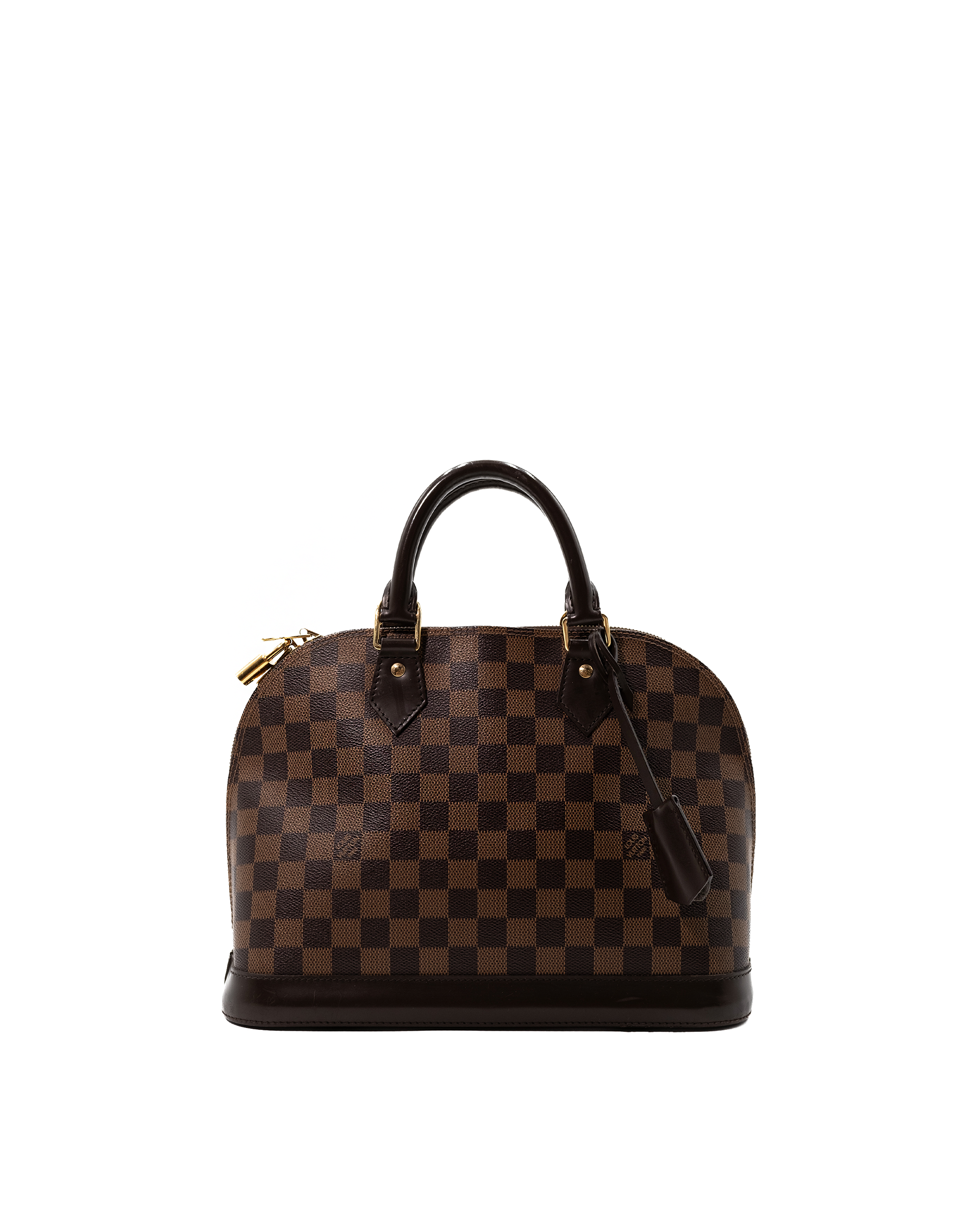
There is a practical advantage between the two canvases that is often underestimated: Damier Ébène, with its dark brown checkerboard pattern, conceals signs of use much better than light Monogram. Our Alma PM in Damier Ébène canvas is an example of how the canvas ages almost invisibly, while the vachetta is what tells the story of the years.
Epi leather
Epi is grained cowhide leather dyed all the way through, meaning the color runs throughout its entire thickness. A superficial scratch therefore does not leave a light line, because the same color lies underneath. It is the most tolerant material for everyday use in the entire Alma range and the only one without visible vachetta components: anyone who does not want to manage patina should look directly for an Epi.
Monogram Vernis
Vernis is leather with a glossy patent finish. It is the most delicate of the four and has two specific issues to know about before buying, not afterward. The first is color transfer: light shades absorb pigment from dark denim, printed paper, and other leathers they remain in contact with, and the stain penetrates the finish permanently. The second is heat: the patent finish can become sticky and deform if the bag is left closed in a car in summer or near a heat source.
On the other hand, Vernis has no vachetta to manage, and the archival colors are the most collectible part of the family. The Alma BB in light-blue Monogram Vernis falls exactly into this category: a seasonal shade that was not reissued, where condition matters more than it does with any other material.
The four checks to make on a pre-owned Alma
Corners
They are the number-one wear point. On canvas versions, the corner gradually wears through: first the vachetta becomes glossy, then it thins, and finally it opens, exposing the edge. An open corner is not an aesthetic but a structural defect, and professionally restoring all four corners is the most expensive repair associated with this model. Always ask for close-up photos of all four, not just one.
Base and feet
The base has metal feet. If they are worn asymmetrically, the bag has always been set down in the same position and the base may be sunken. Place it on a flat surface and view it from the side: it should stand straight without rocking.
Zipper
The Alma has a long zipper that curves around both sides. It is the most heavily stressed mechanical component. Run it through its entire length in both directions: it should not catch on the curve or skip teeth. A zipper that opens by itself under the weight of the contents has a worn slider and must be replaced.
Lock, clochette, and marking
The numbered brass lock and key clochette are part of the original set, but they are also the pieces most easily sourced on the market. Their presence proves nothing about the bag's authenticity. Proper verification relies on other details. To understand how to read the internal marking and why you will not find one on more recent productions, we created a guide to the Louis Vuitton date code and how to interpret it.
What it is worth today on the pre-owned market
The price of a pre-owned Alma depends, in order of importance, on the material, the condition of the corners, and the size. A canvas PM in good condition currently sells for around one thousand euros; a BB in Vernis in an archival color and excellent condition can exceed two thousand five hundred euros, because what influences the price is not only the model but also the uniqueness of the shade.
The useful point, however, is this: between two Almas of the same size and material, the difference in price is determined by the corners and vachetta, not by the number of years. A fifteen-year-old bag that has been well stored is worth more than a five-year-old one with open corners, which is why, with this model, detailed photos matter more than the description.
If you are comparing several examples, look first at the four corners, then the material, and finally the price. In that order. The Almas currently available, with condition verified piece by piece, can be found in our Louis Vuitton collection.

Leave a comment
This site is protected by hCaptcha and the hCaptcha Privacy Policy and Terms of Service apply.