

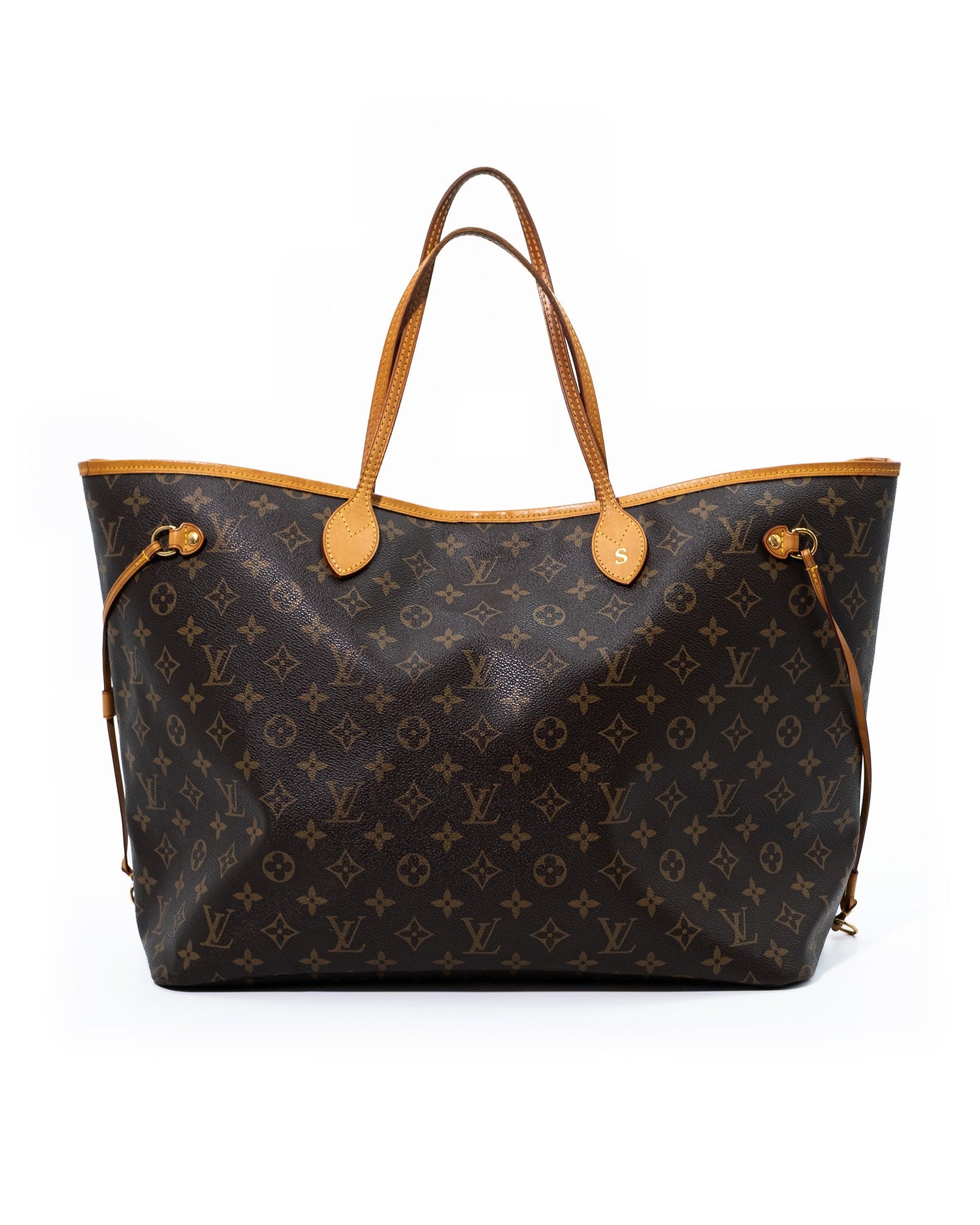
The code printed inside a Louis Vuitton bag is not a serial number and, on its own, does not indicate whether the bag is authentic or fake. It is a production code: it shows where and when the item was made. Knowing how to read it serves another purpose — understanding whether the date it indicates is consistent with the model in front of you. When you buy a pre-owned bag for 800 or 2,000 euros, it is the first concrete check you can perform yourself, even before examining the stitching.
Where to Find the Date Code
The code is heat-stamped on the leather or lining, often on a hidden tab inside an inner pocket, beneath a seam, or behind the lining. The position varies from model to model: on a Speedy, it is normally on a small inner tab sewn into the side seam; on a Neverfull, it is on the inner pocket. It is almost never visible at a glance. If the seller cannot point out where it is, or if the code is stamped in an unusual, clearly visible location, that is already a warning sign worth noting.
Pay attention to a point that confuses many buyers: the date code does not correspond to the number found on tags, dust bags, or the so-called attached “certificate.” These documents are easy to replicate and have no evidentiary value.
How to Read the Date Code
Since 2007, the standard format has been two letters followed by four numbers. The two letters indicate the atelier and country of production (France, Spain, Italy, or the United States). The four numbers encode the date according to this logic:
- the first and third digits indicate the week of the year;
- the second and fourth digits indicate the year.
For example, in the code SP2149, the letters SP refer to a French atelier; the digits 2-1-4-9 are read by crossing them — the first and third (2 and 4) give week 24, while the second and fourth (1 and 9) give 2019. Therefore: made in the twenty-fourth week of 2019. If the digits produce an impossible week, such as week 60, the code is fabricated.
Codes Before 2007
On vintage pieces, the logic is different. Until 2007, the same positions indicated the month rather than the week: the first and third digits indicated the month, and the second and fourth indicated the year. A code from the 1980s may consist of only three or four digits, without letters. This means that finding a format different from the current one on a dated bag is completely normal: the absence of two letters is not, in itself, a defect. What matters is the consistency between the code format and the stated period of the model.
From 2021: the Microchip Replaces the Code
This is the point that overturns many at-home checks. From around 2021, Louis Vuitton gradually stopped stamping the date code and began inserting an RFID microchip inside the bag, which cannot be read by eye. There are two practical consequences. First: a bag produced in recent years may legitimately have no date code at all — its absence is not proof that it is fake. Second: an item presented as very recent but bearing an old-style date code is, conversely, inconsistent. The date indicated by the code must stand up to comparison with the model, its production period, and its materials.
Why a Correct Code Is Not Enough
People who produce copies know these rules as well as experts do. A formally valid code can be printed without difficulty, which is why the code often “checks out” on high-end replicas. For this reason, the logic must be reversed: the code is mainly useful for ruling out authenticity, not confirming it. An impossible code or one inconsistent with the period exposes a fake; a correct code, on the other hand, proves nothing by itself. This is the difference between deciding “authentic or fake” based on a number and forming a judgment based on multiple elements that must all match.
What the Code Does Not Tell You
Monogram Canvas and Vachetta Leather
Monogram canvas is coated canvas, firm to the touch, with sharply defined LV symbols and flowers. The detail that develops a recognizable patina is the vachetta, the untreated natural leather used for handles and trim: with use and exposure to light, it gradually changes from light beige to honey. A bag described as vintage but with vachetta that is still very pale and uniform, or with leather that looks varnished or plastic-coated, warrants further questions. Patina cannot be improvised.
Hardware and Heat Stamp
The hardware is heavy and made of solid brass, with crisp, evenly deep “Louis Vuitton” engravings. In the heat-stamped logo, the letters are regular and well spaced, with perfectly round “O”s. Blurred engravings, lightweight metal, or a print with uncertain contours are among the most common signs found on replicas.
Stitching and Interior Finishes
On Monogram canvas, the stitching thread has a consistent mustard-yellow tone, with even, aligned stitches. The number of stitches on the same tab also tends to be consistent among examples of the same model. Crooked stitching, uncertain coloring, or irregular stitch lengths indicate workmanship that does not belong to the maison.
Professional Verification: Laboratory and Entrupy
None of these checks, taken individually, settles the matter. That is why serious authentication combines the trained eye of someone who handles these pieces every day with technology. For every Louis Vuitton item, Aurea performs a double verification: a qualitative laboratory inspection and Entrupy digital certification, a system that analyzes thousands of microscopic material details and compares them with a reference archive, returning an authenticity result. This is a level of scrutiny that checking the code alone, however correctly, cannot achieve. For a visual overview of the most common signs, our three-step guide to recognizing a fake Louis Vuitton is also useful.
What to Ask Before Buying a Pre-Owned Louis Vuitton
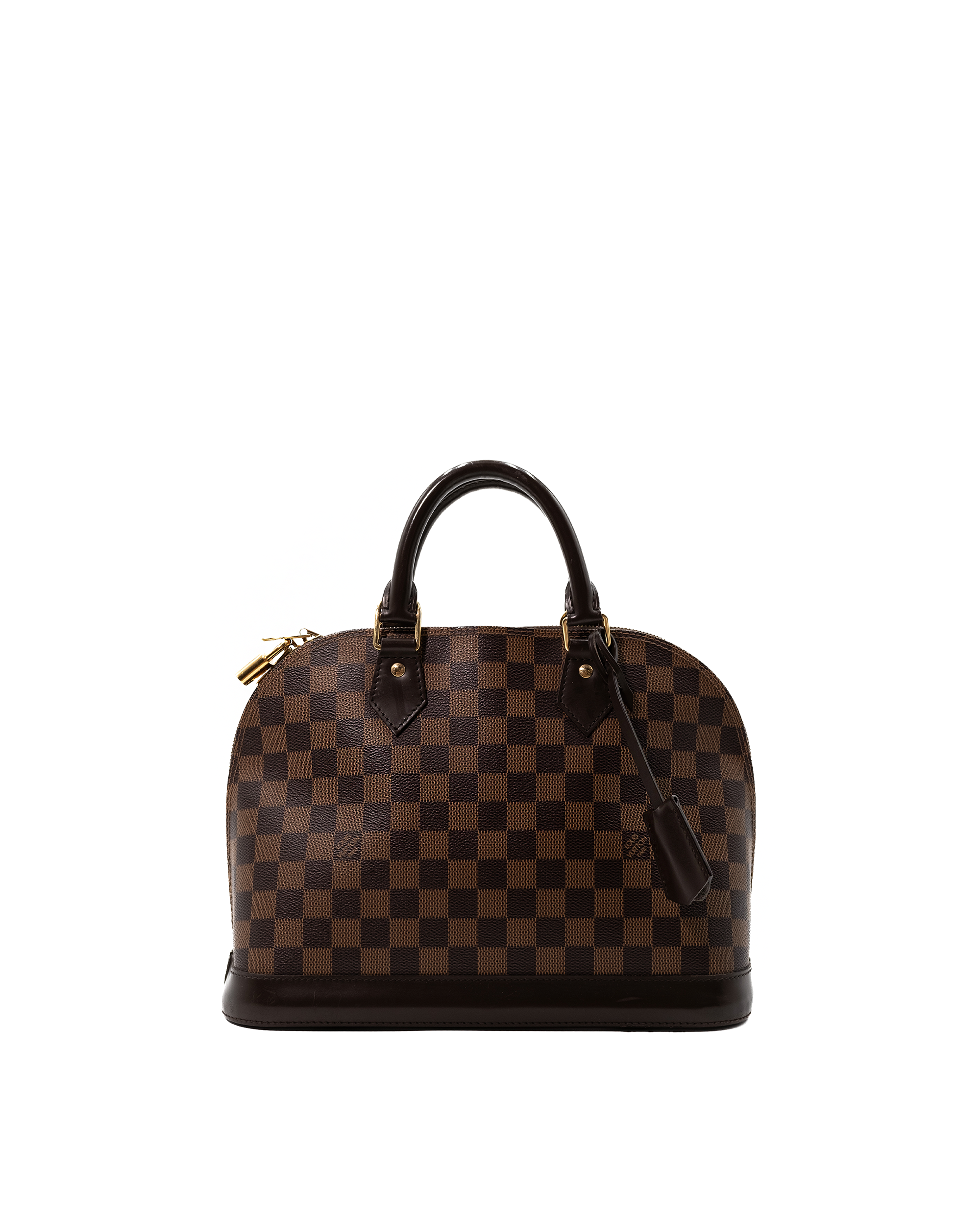
When assessing a pre-owned bag, ask the seller for a clear photo of the date code (or confirmation that a microchip is present on recent models), close-up photos of the hardware, heat stamp, and interior stitching, and a precise indication of the production period. Check that the date read from the code is compatible with the model and the condition of the vachetta. If even one of these elements does not match, stop. In our catalog, you will find certified pre-owned Louis Vuitton bags, including models such as the Speedy 30 in Damier Ébène canvas, the Neverfull GM in Monogram canvas, and the Pochette Métis Monogram: every piece has already undergone double verification, so we have taken care of the difficult part.

Leave a comment
This site is protected by hCaptcha and the hCaptcha Privacy Policy and Terms of Service apply.